As of November 27, 2024
Christopher Zündorf
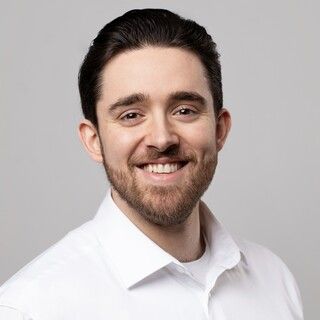
| Current Position | Treasury & Risk Management (Sparkasse KölnBonn) | since May 2024 |
|---|---|---|
| Previous Position | Teaching Assistant for Stochastics/Probability Theory | During my studies |
| Degree | Applied Mathematics (M.Sc.) | May 2024 |
Why did you study mathematics in college?
I wanted to develop the ability to solve complex problems logically and systematically. University gave me the opportunity to delve deeply into mathematics and focus on building a solid theoretical foundation that I could later apply in practice. I also decided to study mathematics because there is no such thing as a “mathematical engineer”—mathematics is a pure science that can only be studied at this depth and with this clarity at the university level.
In which area did you specialize during your studies?
During my bachelor’s degree, my focus was clearly on the field of analysis, specifically partial differential equations. During my master’s degree, my focus shifted toward statistics, stochastics, and probability theory. I found the unique way of thinking required for stochastics fascinating. You can describe a wide variety of uncertainties and use that as a basis for making well-founded decisions.
What aspects of your studies can you apply in your profession?
It’s a fallacy to believe that the formulas or similar elements are the most important part of a math degree. Above all, the analytical approach and understanding of complex models help me in my job. My knowledge of statistics and stochastics comes in handy in risk management, for example when assessing risks or developing models.
Did you envision your career path to this extent before you started your studies?
Not quite. My initial plan was to train as an actuary. But during the application process and in a conversation with my current boss, I realized just how mathematical things can be in a bank, which ultimately convinced me. Ultimately, though, I knew it would be something where mathematics would play a major role.
What would you do differently today as a student?
I would focus even more on practical applications, such as programming languages, and also take on more projects as a working student. That would certainly have made the transition from the “theoretical world of academia” to the professional world easier.
What do you particularly enjoy about your current job?
I really appreciate working independently on problems that can’t always be solved using the same approach. This is very similar to studying math, where you can’t just solve the problems on the weekly worksheets during a 30-minute lunch break. The variety and the opportunity to solve complex problems are simply great. I find it particularly exciting to develop something myself and thereby influence tangible outcomes. The Master’s in Mathematics enables you to understand mathematical relationships very quickly, but the complex world of treasury operations at a bank is something you have to learn anew. You’re constantly discovering new connections and can apply many of the methods you’ve learned in very practical ways.
What three tips do you have for our students in the Department of Mathematics/Computer Science regarding their studies and future careers?
As mentioned above, you should definitely take advantage of internships or part-time student jobs to gain early insights into potential career fields. Theory is important, but practice shows you how to apply that knowledge. Another related point is the mindset of always trying to finish everything as quickly as possible, which can also be a very stressful factor during your studies. Take an extra semester or two to really figure out what you want to do. Ultimately, you won’t save any time if you skip the internships and end up working for years in a job you don’t really want to do.
Remember that mathematics and computer science are closely intertwined. Take advantage of the opportunity to combine both, as this is a major advantage in many professions. My final tip is to build a network and not be afraid to ask questions. Approach professionals or professors and ask the questions that are burning in your mind during your conversations. The right contacts and advice can often take you further than you might initially think possible.